


China is a global powerhouse for natural stone processing, manufacturing, and trade, moving from mass-volume construction supply toward more selective, higher-value materials while experiencing shifting export pricing. The sector is directly related with the Chinese tangible and intangible cultural heritage protection.
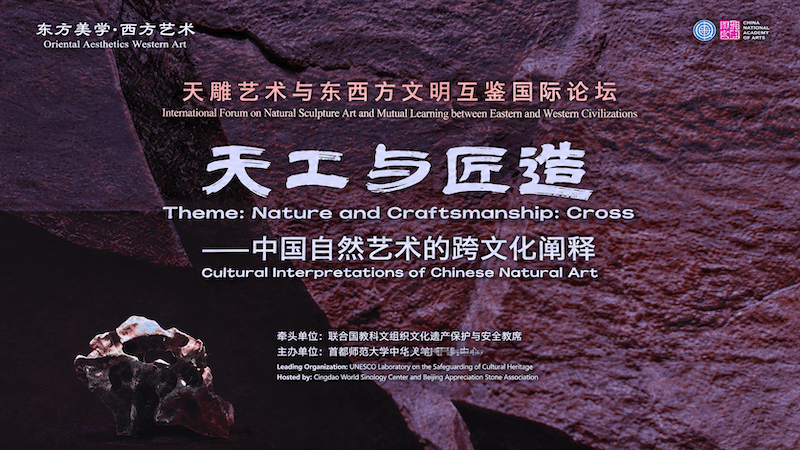
In the framework of the wider “International Forum on Naturally‑Sculpted Art and Mutual Learning Between Eastern and Western Civilizations” the UNESCO Chair on Threats to Cultural Heritage organized in Qingdao – Shandong Province - on 15 November 2026 in cooperation with the World Sinology Center of the Beijing Language and Culture University the Forum: “Nature and Craftmanship – Cross Cultural Interpretations of Chinese Natural Art”.
How does an art in which the artist is, in a sense, nature itself travel to a civilisation whose aesthetic vocabulary was built around the human maker? As a UNESCO Chair devoted to threats to cultural heritage – we believe that dissemination and protection are, two halves of a single task.
The forum’s narrative is based on a Greek pair of words: phýsis and téchnē - nature and art, or craft and building on the Aristotelian teaching that art imitates nature, and completes what nature leaves unfinished. Contrary to the Western aesthetics- line: beauty was something made - measured, proportioned, signed, Chinese stone appreciation proposes a different contract. The stone is found, not made; the human contribution lies in recognising, selecting, naming, mounting and contemplating it.
Here, then, is a genuine meeting point for mutual learning: Chinese stone art can show Western audiences that authorship may be shared between nature and the human eye; the Western tradition can offer the language of documentation, cataloguing and critique that allows such shared authorship to be explained — and trusted — abroad. Trust is the key word, and it is directly related to protection as the international dissemination of a natural art creates a series of specific risks.

 Programme (in Greek)